

Updated on: 2026-05-15
Mystery stories for kids turn everyday details into engaging puzzles. They build attention, vocabulary, and logical thinking through age-appropriate clues. When children predict outcomes and explain their reasoning, they practice confidence and communication. This guide helps parents choose the right kind of mystery and read with purpose, not pressure.
Table of Contents
3. How to Choose Mystery Stories for Kids
4. Reading Strategies That Improve Engagement
Introduction
Mystery stories for kids offer more than entertainment. They teach children how to notice patterns, compare clues, and form respectful conclusions. A good mystery invites curiosity rather than fear. It turns reading time into a guided thinking session, where young readers learn to ask better questions and share clear explanations. For families who want purposeful storytelling, mysteries are an efficient and enjoyable option.
In this article, you will learn how to separate common myths from facts, how to select age-appropriate mysteries, and which reading habits improve comprehension. You will also find practical guidance for supporting independent reading while keeping the tone exciting and reassuring.
Myths vs. Facts
- Myth: Mysteries must be scary to feel exciting. Fact: Strong mysteries can be suspenseful without being frightening, using safe stakes and clear resolutions.
- Myth: Kids do not need clues; they just want plot. Fact: Clues build active reading. Children enjoy spotting details and predicting outcomes.
- Myth: Any mystery is appropriate for every age. Fact: Complexity should match reading level, attention span, and emotional readiness.
- Myth: Solving a mystery is the only goal. Fact: The process matters. Reasoning, discussion, and vocabulary growth are key benefits.
- Myth: Parents should correct answers immediately. Fact: Better results come from guiding with questions that help children explain their thinking.
Personal Experience
One of the most memorable moments in my reading practice involved a simple “guess and explain” routine. After a chapter ended with a new clue, I asked a child to point to the exact sentence that made them uncertain. The child did not just name the solution. They described how the clue fit with earlier details. That small shift turned the story into a reasoning exercise. The child became more confident, and the reading sessions felt calmer and more focused.
How to Choose Mystery Stories for Kids
Choosing the right book is the fastest way to protect motivation. Start with clarity, pacing, and clue design. A strong mystery for children is built around discoverable evidence, consistent characters, and a resolution that feels earned rather than sudden.
Match the mystery to age and reading level
Look for books where the clue trail is visible. If sentences are dense or abstract, younger readers may disengage. For early readers, short chapters and concrete actions help. For older kids, richer dialogue and layered motives can deepen the experience.
Prefer mysteries with friendly tone and safe stakes
Children enjoy tension, but they need emotional safety. Choose stories with wrongdoing that is non-violent or resolved responsibly. The best options maintain curiosity instead of panic.
Check the clue-to-resolution ratio
A satisfying mystery provides enough breadcrumbs. If clues appear only at the end, children feel confused. If there are too many unrelated details, children may struggle to track the main question. Look for a balance where each new clue changes what the reader believes.
Use themes that support learning
Many mysteries naturally reinforce practical skills such as observation, sequencing, and cause-and-effect reasoning. Themes like maps, missing items, and secret messages are especially effective for building attention.
For families exploring curated mystery options, consider Basil the Fox adventures. The series style often supports clue-following and discussion-friendly chapters. You can browse a complete collection here: Basil the Fox bundle. You can also start with a specific clue-driven adventure such as The Seine River clue.

Child pointing to clue symbols on a map
Reading Strategies That Improve Engagement
Once you select a mystery, the way you read shapes the learning outcome. You do not need worksheets or complicated rules. Simple strategies create momentum and make clues feel meaningful.
Preview the “mystery question”
Before reading a chapter, discuss what the story needs to find out. For example, ask: “What does the character need to figure out?” This creates a purpose for reading and helps children track evidence.
Pause for clue spotting, not just guessing
After a scene ends, ask children to identify which details count as clues. A clue is not simply any interesting line. A clue is evidence that supports or challenges a theory.
Use the reasoning loop
Try a three-step loop: claim, evidence, and logic. First, the child states what they think will happen. Next, they point to a line or moment from the text. Finally, they explain how that evidence supports their idea. This loop strengthens comprehension and speaking skills.
Encourage “multiple suspects” thinking
Instead of forcing a single answer, let children consider different possibilities. Ask: “What would have to be true for your suspect to be right?” This reduces frustration and improves flexible thinking.
Build vocabulary through context
Mysteries often include helpful vocabulary such as “pattern,” “evidence,” “identify,” and “discover.” When a new word appears, focus on meaning in the sentence rather than memorization. Children understand more when they connect words to story actions.
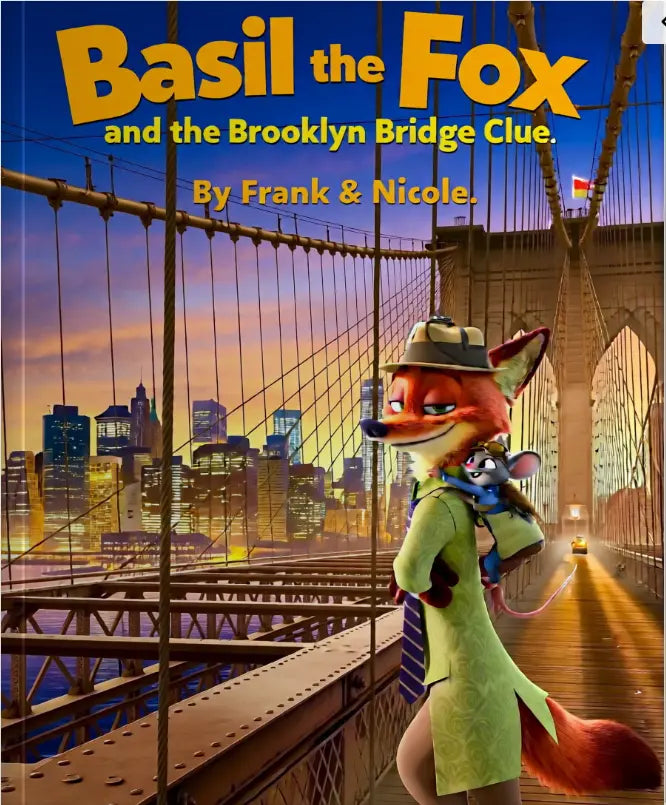
If you want mystery stories with a clear clue pathway, Basil the Fox titles can support guided discussion. For variety, you may explore The Brooklyn Bridge clue or The Whispering Map.

Sticky notes linking clues to a growing timeline
Why Mysteries Matter for Young Readers
Mystery stories for kids support foundational literacy and cognitive skills. They also promote emotional regulation because children learn to handle uncertainty while staying engaged with evidence.
They develop attention and memory
Mysteries require tracking. Readers remember who said what, where something happened, and what details changed after new information appeared. This strengthens working memory and improves reading stamina.
They teach cause-and-effect thinking
Clues usually have a reason behind them. When children connect clue and outcome, they practice cause-and-effect reasoning. Over time, they begin applying similar logic to real-world situations, such as interpreting instructions or planning steps.
They improve language and explanation skills
Discussing clues requires descriptive language. Children practice explaining their thinking with complete sentences. This supports confidence in both reading and speaking, especially for learners who benefit from structured prompts.
They encourage curiosity without overload
Some story types overwhelm young readers with constant action. Mysteries, when well designed, control pacing. The reader knows something is changing, but the story still allows time to think. That rhythm can reduce anxiety and increase enjoyment.
They normalize uncertainty in a healthy way
In a mystery, it is acceptable to be wrong at first. The goal is to refine ideas using evidence. This mindset helps children tolerate uncertainty and participate in collaborative problem solving.
For families who want to deepen the experience beyond a single sitting, episodic or series formats are helpful. Children can revisit previous clues and compare theories across books. This strengthens long-term comprehension and encourages independent reading habits.
Final Thoughts & Takeaways
Mystery stories for kids work best when they invite curiosity, provide clear clue trails, and resolve outcomes in a satisfying way. Instead of focusing only on the final answer, emphasize the reasoning process. Use questions that prompt evidence-based thinking. Keep the tone safe and supportive. When you do, mysteries become an engaging literacy tool.
If you want a structured entry point, consider starting with a curated Basil the Fox story line and then expanding to other clue-driven adventures as your child’s confidence grows. A bundle can help you maintain momentum and variety: Basil the Fox bundle. For immediate engagement, choose a single clue adventure such as The Secret of Central Park to establish a familiar pattern of clues and discussion.
Call to action: Select one mystery story today, preview the central question with your child, and pause after each chapter to ask for evidence-based reasoning. This simple routine turns entertainment into a practice that strengthens reading and thinking.
Q&A
What makes mystery stories for kids different from adult mysteries?
Kid-focused mysteries emphasize clarity, age-appropriate clues, and emotionally safe stakes. They still teach reasoning and attention, but the tone is reassuring and the resolution is structured in a way that supports learning rather than confusion.
How can I tell whether a mystery book is too difficult?
If your child frequently loses track of who is involved, what the clue represents, or why a detail matters, the book may be too complex. You can also test by reading a short section together and asking what they believe is happening. Consistent confusion suggests switching to a simpler level.
Should children solve the mystery alone or with an adult?
Both approaches can work. Independent attempts build confidence, while guided sessions help children learn how to use clues. A balanced method is ideal: let the child make an initial guess, then support explanation by asking which sentences or moments provide evidence.
What reading questions are best for clue-based discussion?
Effective prompts include: “What detail seems like evidence?” “What makes you think that?” “What could change your mind?” and “How does this clue connect to earlier events?” These questions encourage evidence-based reasoning.
Disclaimer: This article is for educational and informational purposes only. It does not replace professional guidance for learning needs or behavioral concerns. Always review content suitability for your child, including theme intensity, vocabulary, and complexity.


Never give up. Today is hard, tomorrow will be worse, but the day after tomorrow will be sunshine.”

