

Updated on: 2026-07-01
Overview
Printable children’s activities provide an immediate, low-friction way to support play, learning, and family routines. They help caregivers deliver structure without overplanning, because preparation can be done once and reused. With the right formats, these materials build early skills such as fine motor control, vocabulary growth, and attention to detail. This guide explains how to choose high-quality options and how to use them effectively across different ages.
Introduction
Parents and educators often search for activities that are engaging, accessible, and practical. Printable children’s activities meet these needs by converting learning goals into clear, ready-to-use tasks. Unlike time-intensive projects, print-based materials can be scaled for different schedules. They also allow children to experience progress quickly, which strengthens motivation. The purpose of this article is to show how to select activities with strong educational value and to apply them in a way that encourages independence and confidence.
Product Spotlight: A Story-Driven Printable Approach
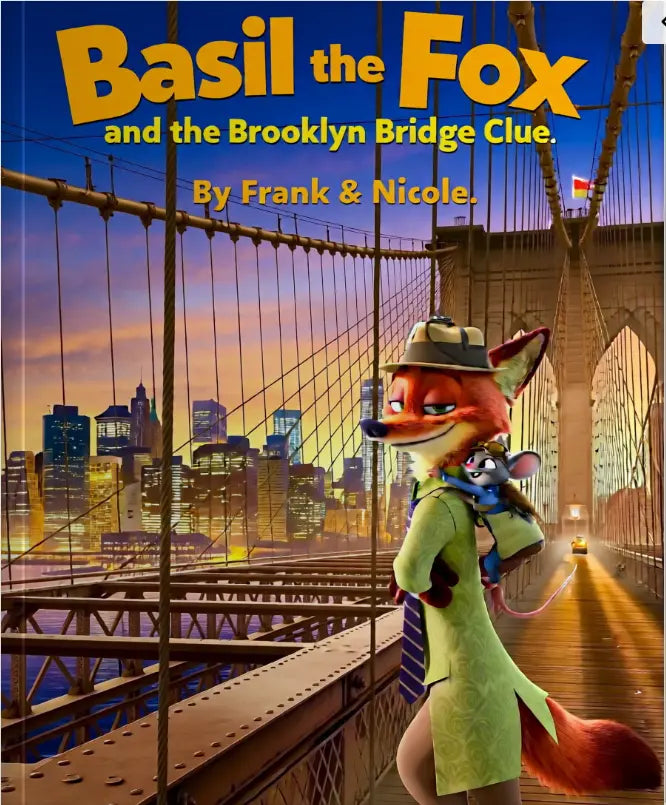
Story-based puzzles and reading clues can turn a simple print session into an experience that children want to repeat. A strong example is the Basil the Fox series, which is designed to combine reading, problem-solving, and guided discovery. When children follow a narrative, they sustain attention longer and practice comprehension skills with less resistance. These materials also work well as quiet-time options, travel companions, or structured “screen-free” breaks that still feel modern and entertaining.
If you want a print session that feels like an adventure, consider starting with the Basil the Fox bundle and then selecting individual clues to match your child’s current interests. You can explore the bundle here: Basil the Fox bundle.
Higher engagement: narrative context makes the activity feel purposeful.
Skill practice: children use reading comprehension and logic together.
Flexible pacing: clues can be completed in short sessions.

Illustrated map lines, speech bubbles, and clue icons
Step-by-Step How-To for Printable Sessions
To get strong results, you need more than the worksheet itself. The setup, presentation, and reflection phase determine whether children remain engaged. Use the steps below to create a consistent routine around printable children’s activities.
-
Choose one objective: Decide whether the session targets fine motor practice, early reading, math concepts, vocabulary, or general problem-solving. One objective keeps instructions simple.
-
Select the right difficulty: Use a “just-right” level: the child can complete most steps with light guidance. If the activity is too hard, attention drops quickly.
-
Prepare materials before starting: Print the set, gather pencils or crayons, and place a timer within reach. Preparation reduces interruptions.
-
Model the first step: Explain what to do using the first item only. Then let the child continue independently to build ownership.
-
Limit time, not effort: Use a short time window, then offer a continuation option. Many children stay focused when they know the session ends predictably.
-
Add a micro-reflection: Ask one question after completion, such as what strategy worked or what part was easiest. Reflection supports metacognition.
-
Store for reuse: Keep completed sheets in a folder. Review later to reinforce learning and show progress.
Personal Experience: Turning “Just Printing” Into Motivation
In practice, the difference between a worksheet that gets ignored and an activity that becomes a favorite often comes down to the framing. I once tested a print-based problem set in a household where children typically avoided paper tasks. The first attempt was purely functional: “Fill in these answers.” Results were inconsistent and attention faded early.
On the second attempt, the same materials were framed as an unfolding story. The child received the pages as “clues,” and the goal was to solve a simple mystery by following the order of the clues. The instructions remained the same, but the meaning changed. Instead of “finish the page,” the goal became “find the next answer to continue.” That subtle shift increased persistence, improved completion rate, and reduced frustration.
This outcome aligns with a well-known principle in learning design: motivation improves when activities have purpose, sequence, and feedback. Printable children’s activities can deliver all three, especially when caregivers use a narrative or goal-driven approach.
What to Look For in High-Quality Printable Children’s Activities
Not all printables support learning equally. To choose materials that consistently perform, evaluate content design, clarity, and developmental fit. Strong printables usually offer instructions that are easy to interpret at a glance and tasks that progress logically.
Clarity and layout that reduce cognitive load
Children benefit when instructions are brief and visually organized. Look for clean formatting, simple language, and a clear start point. If a sheet requires constant explanation, it may not support independence.
Skill alignment with observable outcomes
Good activities connect to skills you can see. Examples include tracing for motor control, counting tasks for early numeracy, and word matching for vocabulary. Alignment matters because it helps you choose materials that support your learning priorities.
Multi-age flexibility and adjustable challenge
Many families need materials that work for more than one child or that can scale over time. Choose printables that support extensions, such as adding an extra step, increasing accuracy requirements, or asking open-ended questions.
Ways to Use Printables Across Real Life Routines
The most effective printable routines fit the household rhythm. Rather than treating printables as a special event, integrate them into daily transitions. This approach reduces last-minute planning and improves consistency.
After-school decompression: Start with a short, calming task and end with a “win” item that is easy to finish.
Travel readiness: Pack a small set in a folder. Single-page challenges minimize bulk and keep children engaged while waiting.
Weekend skill building: Use longer multi-step pages and schedule breaks so children can reset.
Independent learning time: Provide a clear sequence and let children choose between two difficulty options.

Time blocks, folder tabs, and checkmarks on a calendar grid
Choose a Series for Continuity and Reuse
Continuity turns one-time printouts into an evolving learning pathway. A series format supports memory, because children anticipate the structure and know how to participate. It also encourages caregivers to reuse printables without restarting from scratch.
Story clue formats are particularly effective because they combine reading with action. For example, you can select a single title to match the theme you want to explore, such as bridges, parks, rivers, or seasonal mysteries. To see examples from this approach, you can review additional titles here: The Missing Midnight Key and The Whispering Map.
Summary & Recommendations
Printable children’s activities are a practical solution for families who want engaging, structured learning without constant preparation. When caregivers choose clear, skill-aligned content and use a goal-focused routine, printables become more than “paper work.” They support persistence, independence, and meaningful skill practice.
For best results, select one objective per session, match the difficulty level, and include a brief reflection after completion. If you want higher engagement, prioritize formats that add sequence and purpose, such as story clue systems. Finally, store completed pages so children can revisit achievements and build long-term confidence.
CTA: If you want print-based activities that feel like an adventure, explore the Basil the Fox collection on FN Library Online and choose the titles that best match your child’s current interests.
Disclaimer: This article is for general educational guidance. Always supervise children during learning activities and adapt difficulty to individual needs.
Q&A
How many printable activities should a child complete in one session?
For most children, one clear objective per session is the most effective approach. A typical session can include one main activity plus a short follow-up item. If the child remains engaged, you may add a second task, but avoid stacking too many steps at once.
What is the best age range for printable children’s activities?
Printable activities can be adapted for a wide range of ages. The key factor is difficulty and instructions. Look for options that match the child’s reading level, motor skills, and attention span, and choose materials that allow support for early learners and independence for older children.
How can I keep children motivated when they dislike worksheets?
Motivation improves when the activity has a purpose. Present printables as a challenge, a set of clues, or a short mission rather than a task to complete. Use clear time boundaries, provide a brief model of the first step, and add a single reflection question so children feel progress rather than pressure.


Never give up. Today is hard, tomorrow will be worse, but the day after tomorrow will be sunshine.”

