

Updated on: 2026-06-30
Learning through storytelling turns abstract ideas into memorable experiences. It supports attention, meaning-making, and long-term recall by placing information inside a narrative arc. When learners follow cause and effect, they practice reasoning rather than only memorizing facts. This approach also strengthens engagement because emotions and imagery guide understanding. With the right structure, storytelling becomes a measurable learning method for individuals and teams.
Why learning through storytelling matters
People rarely remember information in isolation. They remember what something meant, why it mattered, and what happened next. Learning through storytelling meets those needs. A narrative provides a context for knowledge, and it gives learners a reason to care. Instead of processing content as disconnected points, learners track a sequence of events and interpret relationships.
This method is effective across ages because stories mirror how humans naturally make sense of the world. Even when content is academic, a strong plot offers an organizing framework. Learners can connect new concepts to prior understanding by imagining motivations, obstacles, and outcomes. As a result, comprehension becomes deeper and recall becomes more consistent.
From a practical standpoint, storytelling also improves learning behaviors. Learners ask questions, predict outcomes, and reflect on character decisions. These behaviors strengthen metacognition, which means learners monitor their own understanding. Over time, that monitoring supports better reading skills, clearer thinking, and more confident application of knowledge.
Product spotlight: immersive story collections
For readers who want an engaging way to study through narrative, immersive mystery and adventure collections offer an effective entry point. Mystery-style stories provide built-in curiosity. They invite the reader to observe details, follow clues, and test interpretations as the story unfolds. That structure supports active learning without turning the experience into a rigid worksheet exercise.
High-quality digital story bundles also help learners return to a theme repeatedly. Repetition is essential for skill development, but it is more motivating when it stays within an engaging narrative world. When a learner revisits characters and settings, they strengthen comprehension and vocabulary while maintaining attention.
If you want an example of this storytelling-driven approach, consider exploring a curated bundle from FN Library Online that is designed for readers who enjoy clue-driven discovery and character-led problem solving. You can browse the collection here: City Mystery Bundle. For readers who prefer a single challenge, individual clue stories are also available. For example: Seine River Clue.

Visual map of story beats guiding understanding
How stories improve learning
Story-based learning works because it aligns several cognitive processes. Understanding improves when the brain can form patterns, predict outcomes, and retrieve meaning. Narrative structure supports each step.
1) Narrative context reduces cognitive load
When information is placed inside a scene with purpose, learners spend less effort trying to determine relevance. The story supplies a natural “why.” That clarity helps the mind focus on interpretation. Instead of memorizing isolated facts, learners process information as part of a coherent sequence.
2) Characters make abstract ideas feel concrete
Many learning challenges involve unfamiliar concepts. Stories translate those concepts into lived experience. A character’s choices model decision-making. Readers observe cause and effect through the plot, which supports reasoning and practical application.
3) Suspense and curiosity strengthen attention
Curiosity is not a distraction. It is a learning accelerator. When a story uses questions, clues, and escalating obstacles, learners remain active. They are more likely to read carefully because they expect new information to matter.
4) Reflection increases retention
Strong narratives create opportunities for reflection. Learners can summarize events, explain why a character acted a certain way, and connect decisions to outcomes. Reflection supports retrieval practice, which is the process of bringing information back to mind. Retrieval practice improves long-term memory more effectively than re-reading alone.
Myths vs. facts
Myth: Stories are only for entertainment.
Fact: Stories can teach. A narrative can convey vocabulary, reasoning steps, and cultural context while preserving motivation. When authors design purposeful arcs, learning happens through meaningful engagement.
Myth: Any story will work for learning.
Fact: Not all narratives are equally supportive. Learning outcomes improve when the story has clear structure, relevant themes, and moments that invite prediction, inference, or explanation.
Myth: Learning through storytelling replaces direct instruction.
Fact: Storytelling complements instruction. The most effective approach blends explanation with narrative. For example, educators can introduce key concepts briefly, then use a story to reinforce and apply those concepts in context.
Myth: Complex plots are always better.
Fact: Difficulty should match the learner. An overly complex plot can reduce comprehension. The best stories balance challenge with clarity and ensure that learners can follow cause and effect.
How to design learning with stories
Whether you are planning a lesson or guiding home learning, you can apply a repeatable design framework. The goal is not to add stories at random. The goal is to use narrative structure to produce specific learning behaviors.
Step 1: Define the learning goal first
Start with the skill or concept you want learners to develop. Examples include comprehension strategy use, vocabulary growth, or reasoning. A story should serve that goal. Without a clear target, storytelling becomes vague and outcomes become harder to measure.
Step 2: Choose a narrative frame that supports the goal
Different story formats encourage different thinking. Mystery plots can strengthen inference and evidence evaluation. Adventure plots can model goal planning and persistence. Everyday problem stories can support empathy and communication. Select a format that naturally matches your objective.
Step 3: Embed learning moments inside the plot
Place key information where learners must notice it. For example, a clue can represent a concept. A decision point can prompt explanation. A consequence can reinforce cause and effect. Learning moments work best when they feel like part of the story, not like a separate lesson added on afterward.
Step 4: Use prompts that require reasoning
After or during reading, ask questions that move beyond recall. Encourage learners to justify answers using evidence from the text. Prompts can include predictions, “What clues led you to that conclusion,” and “How would the outcome change if a key condition changed?”
Step 5: Reinforce through reflection and repetition
Reflection consolidates learning. Learners can summarize events in their own words, write a short explanation of character choices, or retell a scene from a different perspective. When the same theme appears in multiple episodes, reinforcement becomes natural and motivating.

Reasoning ladder showing clues to conclusions
Practical classroom and home strategies
Learning through storytelling becomes stronger when routines are consistent. The following strategies are designed for real settings and can be adapted to different reading levels.
Create a “story evidence” habit
Teach learners to support opinions with details. For instance, when they predict an outcome, they should name the specific clue that supports the prediction. This habit builds evidence-based thinking, which benefits literacy and critical reasoning.
Use short reading sessions with targeted reflection
Instead of long sessions that blur attention, use focused segments. After each segment, ask a single high-value question. That structure supports comprehension monitoring and prevents learners from disengaging.
Alternate between listening and reading
For younger learners or developing readers, listening can reduce decoding effort so comprehension can lead. Then switching to reading strengthens independence. The key is to preserve the narrative experience while supporting access.
Connect story themes to real learning tasks
Story content can support writing and speaking. After reading, learners can write a short “case file” that explains a solution using evidence. They can also discuss how character goals drive actions. These tasks transfer narrative skills into academic communication.
Track progress through observable behaviors
Learning outcomes are easier to improve when you measure behaviors rather than hope. Track whether learners can summarize accurately, infer meaning from details, or explain cause and effect. These are observable indicators of story-based learning.
Recommended next steps for curious readers
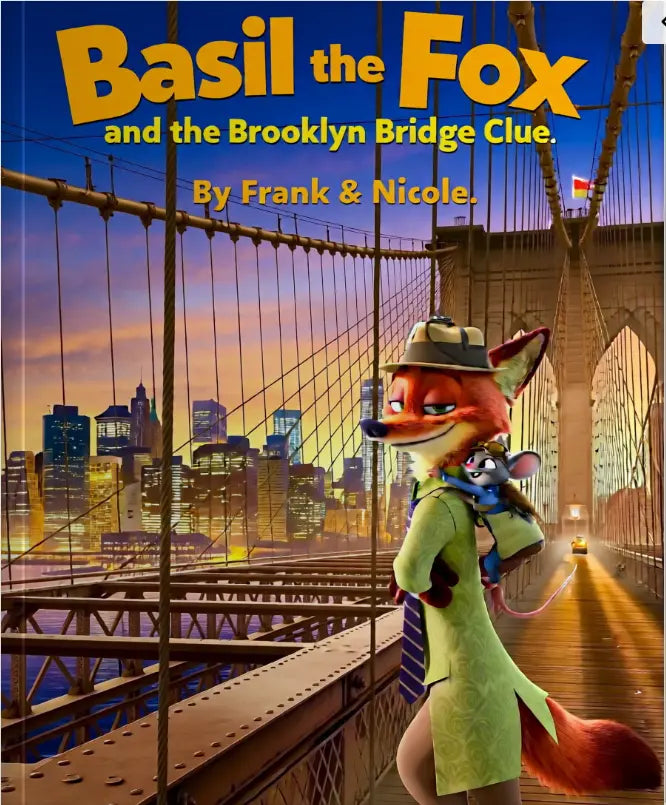
If you prefer a structured, clue-driven experience, explore additional story options within the same theme ecosystem. You can find related adventures here: Brooklyn Bridge Clue and Secret of Central Park. Each title offers its own narrative challenge while reinforcing the same core skills: careful observation, evidence use, and logical interpretation.
Final recommendations
Learning through storytelling is not a trend. It is a practical approach grounded in how memory and meaning formation work. When stories provide context, learners attend more closely. When narratives include decision points and consequences, learners reason more effectively. When readers reflect on evidence, retention improves.
To get the best results, combine narrative experiences with purposeful prompts. Define a clear learning goal before reading. Ask questions that require explanation, not only recall. Reinforce understanding through brief reflection and repeated encounters with the same themes. When you do this, storytelling becomes an instructional tool rather than a passive activity.
If you want a motivated way to build comprehension and reasoning, select reading material designed for active discovery. Explore story bundles and clue-based adventures from FN Library Online, and choose the option that matches the learner’s interests and reading level.
Disclaimer: This article provides general educational guidance. Results depend on individual learner needs, prior knowledge, and consistent practice. No performance outcomes are guaranteed.
Frequently Asked Questions
Is learning through storytelling suitable for adults as well?
Yes. Adults benefit when stories provide context, realism, and clear reasoning. In professional training, narratives can support decision-making and interpretation of complex information. The same principle applies: learners remember stories that show how and why outcomes occur.
How can I tell whether a story-based activity is actually improving learning?
Look for observable behaviors. If learners can summarize accurately, explain cause and effect, use evidence from the text, and make predictions grounded in details, learning is likely improving. You can also compare performance after practice sessions to monitor progress.
What if a learner struggles with reading or attention during storytelling?
Adjust the format and pacing. Use shorter segments, consider guided listening, and ask simpler evidence questions. Reduce time pressure and focus on one reasoning prompt per segment. Over time, gradually increase complexity and independence.
Should I use stories instead of textbooks or worksheets?
Stories should complement structured materials. Textbooks and worksheets are useful for skill coverage and targeted practice. Storytelling strengthens motivation and meaning, while direct instruction clarifies fundamentals. A balanced approach often yields the strongest learning outcomes.


Never give up. Today is hard, tomorrow will be worse, but the day after tomorrow will be sunshine.”

