

Updated on: 2026-06-23
Children's mystery stories build curiosity while strengthening reading confidence. They invite young readers to observe details, make reasonable guesses, and follow a logical sequence of clues. When thoughtfully chosen, these narratives support vocabulary growth and attention skills without feeling like lessons. This guide explains what makes strong mystery writing for children and how caregivers can turn each chapter into a meaningful learning moment.
Table of Contents
1. What children's mystery stories teach
2. Did you know? Why mysteries work
3. How to choose the right mystery book
4. Expert tips for guided reasoning
5. Personal experience reading mysteries
6. Summary and takeaways
7. Q&A
What children's mystery stories teach
Children's mystery stories do more than entertain. They train young readers to notice patterns and to connect cause and effect. A well-constructed mystery presents a problem, offers clue signals, and rewards careful thinking. That structure gives children a clear reading purpose: understand what happened, identify what matters, and decide what comes next.
In practice, these stories strengthen several core literacy and cognitive skills. First, they support close reading. Clues often appear in small actions, repeated phrases, or descriptions of objects and places. Children learn to slow down and interpret details rather than skim for only the most obvious event.
Second, mysteries build reasoning. Readers form hypotheses, then test them as new information arrives. This creates a natural pathway for logical thinking. Even younger readers can practice the habit of asking, “What evidence supports this?”
Third, mystery plots improve narrative comprehension. Mystery stories usually include a sequence: setup, discovery, investigation, misdirection, and resolution. Such organization helps children understand story structure, character motivation, and timeline logic.
Fourth, these stories encourage emotional regulation. When children feel anxious about uncertainty, a mystery offers safe uncertainty. They learn that confusion can be productive. The story keeps moving, and the reader knows that clarity will eventually arrive.

Childlike detective tools: magnifier, notes, compass lines
Did you know? Why mysteries work
- Mysteries convert “I wonder” questions into focused reading goals.
- Clues teach children to separate what they guess from what they observe.
- Red herrings model how stories create false leads without real danger.
- Repetition of clue themes strengthens vocabulary and memory.
- Final reveal moments support retention through satisfying cause-and-effect closure.
When caregivers understand these mechanisms, they can select books that match a child’s developmental stage and attention span. That alignment matters because a mystery that is too complex can discourage persistence, while one that is too simple may not challenge enough.
How to choose the right mystery book
Choosing the right mystery for a child is less about age alone and more about reading independence, comfort with suspense, and interest in the setting. Consider the following criteria.
Match clue density to attention span
Some mysteries offer quick, frequent clue discoveries. Others reveal information gradually. If a child tends to lose focus, start with plots that provide frequent confirmations. If a child enjoys sustained attention, choose stories with layered clues and longer investigative sequences.
Look for clear fairness in the puzzle
A high-quality mystery gives children a fair chance. Clues should be present in the text, even if not all are obvious at first. Fairness supports trust. When children feel that the ending is logical rather than random, they enjoy the process of reasoning even more.
Prefer character-driven problem solving
Strong children's mystery stories emphasize competence and curiosity. A detective figure should model ethical behavior and careful observation. Even when misdirection occurs, the child reader should see that the characters use evidence and respect rules. This approach keeps the tone constructive and confidence-building.
Select themes the child already cares about
Many children respond strongly to familiar locations, animals, or school communities. A mystery set in a city park, a museum, or a neighborhood can make clue reading feel more immediate. If the setting connects to a child’s lived experiences, engagement tends to rise.
Use the Basil the Fox series as a structured starting point
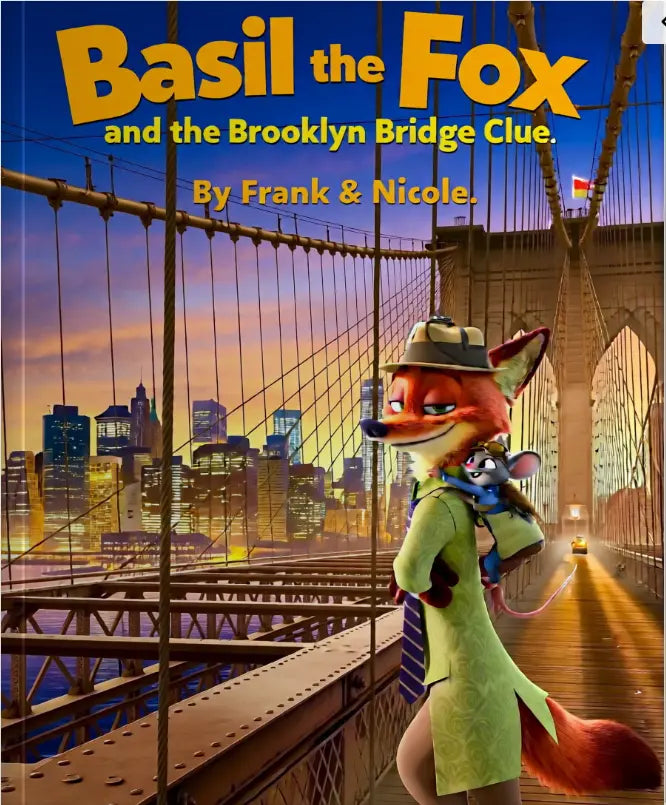
If you want a dependable entry point into clue-based storytelling, the Basil the Fox collection is designed for children who enjoy investigation with warmth and humor. You can explore a curated bundle here: Basil the Fox City Mystery Bundle. For a single mystery with a clear narrative arc, you may also consider: Central Park mystery. These options can help you maintain continuity across reading sessions.
Expert tips for guided reasoning
Caregiver guidance can elevate enjoyment without turning reading into a test. Use these practical methods to support reasoning in a natural way.
Ask evidence questions, not outcome questions
Instead of asking, “Who did it?” use prompts such as, “Which detail made you think that?” or “What did the character observe?” Evidence questions encourage children to connect their conclusions to text-based support.
Practice “two-lane thinking” during misdirection
When the story presents an alternative explanation, encourage children to hold two ideas: the current theory and the competing possibility. This models flexible thinking and reduces frustration when the plot shifts.
Use short clue recaps after each reading session
At the end of a session, invite a brief recap. Children can list the clues they remember and the hypothesis they formed. This reinforces memory and supports later comprehension.
Distinguish between clues and character assumptions
Many mysteries include characters who make mistakes. Teach children to label information as either clue evidence or assumption. Over time, children learn to evaluate reliability.
Celebrate predictions that are updated
High-quality mysteries often require revising beliefs. Praise children for adjusting their thinking when new evidence appears. That habit supports intellectual humility and strong comprehension skills.

Clue board with arrows: observation, hypothesis, revision icons
Personal experience reading mysteries
In my experience, children's mystery stories work best when the adult reads with a calm, curious posture. I recall a reading session where a young reader insisted that a “missing item” must have been carried off by the character who seemed most suspicious. The plot later introduced a small detail that contradicted the assumption: a subtle description of a sound and a timing pattern. Rather than correcting quickly, I asked the reader to point to the sentence that supported the theory. Then I asked what new text the story offered.
The change was immediate. The reader did not feel embarrassed; they felt involved. They revised the hypothesis and explained the new reasoning. That moment illustrated a major value of clue-based stories: children learn to treat uncertainty as information, not as failure.
Over several sessions, the same child started to look for repeated motifs, especially objects described more than once. Each repetition became a cue for deeper reading. The child also began to ask better questions, such as why a character chose a particular route or why a specific observation was emphasized. The mystery format created a natural pathway for higher-level comprehension.
If you plan to read with your child, consider a consistent routine. Begin by previewing the setting and the problem. During reading, encourage observation. After reading, confirm which details were clues and which were assumptions. This approach makes the reading experience structured but still enjoyable.
Summary and takeaways
Children's mystery stories develop far more than entertainment value. They strengthen close reading, reasoning habits, narrative comprehension, and emotional comfort with uncertainty. When selecting a book, focus on clue density, plot fairness, character-driven problem solving, and themes aligned with the child’s interests. Guided discussion can further enhance learning when it centers on evidence-based questions and careful updates to predictions.
For readers who want a reliable, clue-forward entry point, consider exploring the Basil the Fox catalog. Start with a curated set for variety, or choose a single mystery to build steady momentum. With the right support, mysteries can become a confidence-building reading routine that children look forward to.
Next step: If you are shopping for your next read, browse the Basil the Fox mysteries on FN Library Online and select one that matches your child’s current interests and comfort with suspense.
Suggested exploration: Whispering Map mystery and Missing Midnight Key.
Q&A
Are children's mystery stories appropriate for different reading levels?
Yes. The key is to match clue complexity and suspense intensity to the child. A beginner-friendly mystery typically offers clear clue moments and a predictable pattern of investigation. More advanced mysteries use higher clue density, deeper misdirection, and longer chains of cause and effect.
How can I help a child without giving away the ending?
Use evidence-focused prompts. Ask what detail led to a hypothesis, what observation changed their thinking, and which clue appears again later. You can also encourage recap at the end of a session. This helps the child feel guided while still doing the intellectual work.
What should I look for in a good mystery resolution?
A strong resolution explains how the clues connect, without relying on surprise alone. The ending should feel logical and fair, showing why earlier information mattered. When the story clearly ties evidence to the reveal, children learn that careful reading produces understanding.
Disclaimer: This article provides general guidance for selecting and discussing children’s books. It is not a substitute for professional advice regarding a child’s educational needs. Always choose content that aligns with your household preferences and the child’s comfort level.


Never give up. Today is hard, tomorrow will be worse, but the day after tomorrow will be sunshine.”

