

Updated on: 2026-06-09
Children’s mystery e-books help young readers build focus while enjoying a story-driven puzzle. They support curiosity through clues, careful observation, and logical thinking. Families can use these books for shared reading and calm screen-free engagement. With well-designed mysteries, children learn to ask questions, track details, and follow a satisfying solution.
Table of Contents
What Are Children’s Mystery E-Books?
Children’s mystery e-books are storybooks built around a mystery, a set of clues, and a resolution. They are designed for early readers, middle-grade readers, and strong young readers who want a challenge. Instead of a random plot, the story structure usually follows a clear pattern: an odd situation appears, clues are presented, suspects or possibilities narrow, and the child reaches a solution with the help of evidence from the text.
In practice, the best children’s mystery e-books encourage active reading. Children notice details, compare what they see with what they are told, and infer meaning from small hints. The reading experience often feels like a guided game, but it remains rooted in literacy. That is why many educators and parents treat mystery narratives as both entertainment and skill-building material.
For families exploring curated digital libraries, it can help to look for titles that balance suspense with clarity. The right mystery should keep tension high while still offering enough textual support for comprehension. When this balance is achieved, children remain engaged without becoming frustrated.
A Personal Experience With Mystery Reading
I once observed a family choose a mystery story during a busy week. The child had limited time and a short attention span that made structured learning feel difficult. On the first page, the setting was calm but slightly unusual, with a missing item and a clue left behind. Within minutes, the child began to predict what might happen next and asked direct questions about the evidence.
What stood out was the shift from passive reading to active reasoning. The child was not simply waiting for the answer. Instead, the child was tracking details: where the clue appeared, who mentioned it, and how the character responded. By the final pages, the child could explain the solution using specific story elements. That moment demonstrated how a well-written mystery can turn reading into thinking.
This is also why many families prefer mystery formats over purely informational books for certain children. Mysteries provide an emotional arc, and that emotional engagement helps the mind stay with the text.

Child-led clue board with question marks and arrows
Key Advantages for Children and Families
Children’s mystery e-books offer benefits that extend beyond entertainment. Below are advantages that parents, caregivers, and educators commonly look for when choosing mystery reading material.
- Stronger reading comprehension: Clue-based narratives reward careful reading. Children learn to connect details across scenes.
- Improved attention and persistence: The story keeps momentum. Readers often stay engaged because progress toward the answer is visible.
- Logical thinking and inference: Clues encourage children to infer meaning. They practice forming hypotheses and testing them with evidence.
- Vocabulary growth: Descriptive language, character actions, and investigative terms appear naturally within the plot.
- Family conversation: Mystery stories create natural prompts for discussion. Parents can ask what a clue suggests without turning it into a test.
- Safe, age-appropriate suspense: Many children’s mysteries deliver tension without relying on inappropriate content. The focus stays on observation and reasoning.
Additionally, digital formats can make it easier to support consistent reading habits. A child can return to a chapter, reread a clue, or review a past detail without searching for a physical copy. When used intentionally, this flexibility strengthens learning behaviors.
For families who want a guided detective experience, an established mystery series can reduce decision fatigue. Instead of searching for a new story each time, readers can follow familiar characters and formats, which helps them focus on clue-solving rather than unfamiliar storytelling styles.
Quick Tips for Choosing the Right Mystery Series
Selecting a mystery e-book is easier when you evaluate a few key elements. Use the checklist below to match the story to your child’s needs and interests.
- Check clue clarity: Look for stories where clues are described in a way a young reader can notice and discuss.
- Match difficulty to confidence: If the book feels too hard, choose a shorter or simpler mystery and build upward.
- Prefer a consistent structure: Clear chapters and a steady escalation of clues help children stay oriented.
- Look for positive character behavior: Strong mysteries encourage responsibility, honesty, and respectful problem-solving.
- Use recurring locations and themes: Familiar environments make it easier to track details and remember clues.
- Consider read-aloud friendliness: Many children enjoy role-playing suspects or voicing detective narration during shared reading.
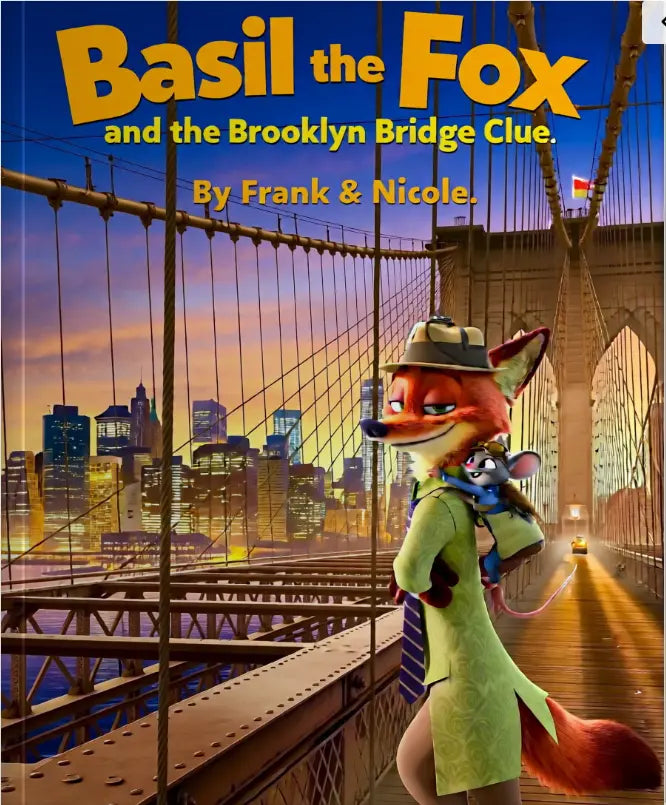
If you want a practical starting point, consider a children’s mystery e-books series featuring detective-style adventures. One option from a trusted digital bookstore is the Basil the Fox mystery line, which is built around clue-solving and engaging locations. You can explore a bundle here: Basil the Fox bundle.
How to Use Mystery E-Books at Home
Mystery reading works best when it is interactive in a calm, supportive way. The goal is not to force correct answers. The goal is to strengthen the habit of using evidence from the story.
Set a simple reading ritual
Choose a consistent time and routine. For example, read a short segment, pause, and ask one question. A short ritual helps children know what to expect, which reduces resistance and improves participation.
Ask evidence-based questions
Instead of asking what the child thinks will happen, ask what the child observed. Evidence-based questions include:
- Which detail stood out and why?
- What clue suggests a specific explanation?
- How did the character’s actions change after the clue appeared?
Encourage detective notes
Children can track clues using simple lists. They can draw icons for evidence, circle key objects in the story if the format supports it, or keep a small notebook of “clue, suspect, conclusion.” This is a literacy skill in disguise because it trains organization.
Use multiple story comparisons
When children read more than one mystery, they begin to recognize patterns. They may learn how authors place misdirection, how clues function across chapters, and how solutions are justified. This comparative reading strengthens comprehension and metacognitive awareness.
If you want additional options within the same overall universe of clue-driven stories, you may explore individual Basil the Fox adventures. For example, consider starting with a single clue-based title such as the Central Park mystery or expanding into other locations. This approach allows you to match story settings to your child’s interests without changing the investigation style.

Timeline of clues leading to a final solved label
Summary & Next Steps
Children’s mystery e-books combine suspense with structure. They encourage careful reading, logical thinking, and evidence-based discussion. When families select mysteries with clear clues and age-appropriate complexity, children gain confidence while enjoying an engaging story arc.
To move forward, choose one mystery and commit to an active reading approach. Use short sessions, ask questions tied to evidence, and allow the child to propose solutions before revealing the outcome. Over time, the child will learn not only “what happened,” but also “how to read” in a more analytical way.
If you want to explore a wider catalog of story-driven digital reading experiences, you can also visit Book Tanks for additional inspiration on creative reading and storytelling formats. For further clue-focused options from a dedicated digital bookstore, review the Basil the Fox adventures and begin with the title that best matches your child’s current interest level.
How old should a child be to enjoy mystery e-books?
Mystery e-books can work across a wide age range, but the best match depends on reading level and attention span. Many children enjoy lighter mysteries earlier when the clues are clear and the language is accessible. For younger readers, shared reading and short sessions can support comprehension.
Do mystery e-books improve reading skills or only entertain?
They can support reading skills as well as entertainment. A mystery structure naturally encourages children to track details, infer meaning, and connect events. When adults ask evidence-based questions, children practice comprehension and reasoning while staying motivated by the story.
What should I do if my child becomes frustrated during a puzzle?
Reduce the challenge and maintain momentum. Pause and focus on one clue at a time. Ask what the child noticed in the text, rather than what the child “knows.” If needed, choose a simpler mystery or reread an earlier chapter to refresh the evidence.
How can I choose between a series and a standalone mystery?
A series often provides familiar characters, repeated investigation methods, and a consistent storytelling style. That familiarity can reduce cognitive load. A standalone mystery can be useful when you want a quick start or a one-time introduction to clue-solving. Both formats can be effective if the difficulty level fits the child.
Disclaimer: This article provides general information about children’s reading experiences. It is not medical or educational advice, and it does not guarantee results. Individual needs vary by age, reading level, and personal interests.


Never give up. Today is hard, tomorrow will be worse, but the day after tomorrow will be sunshine.”

