
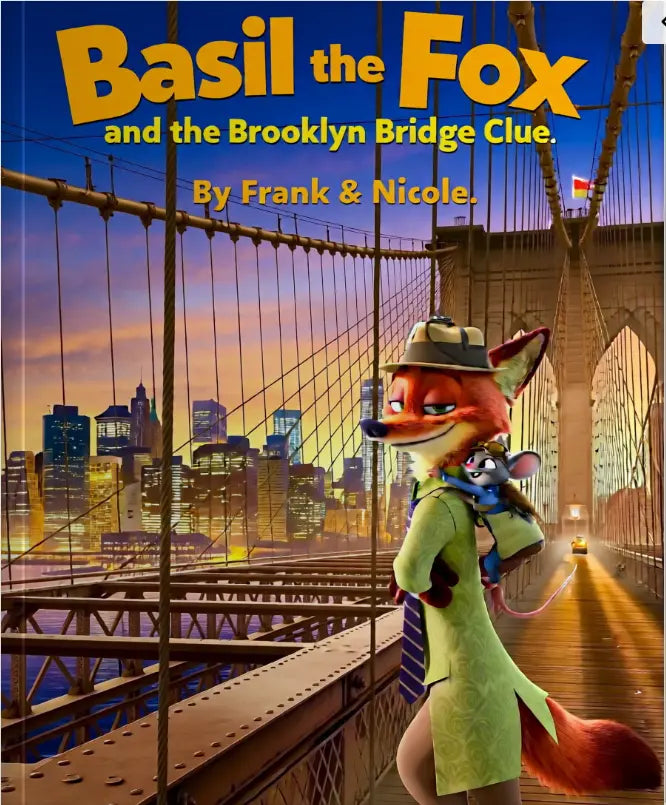

A child opens a digital book looking for dragons, planets, or a bedtime laugh. A parent opens the same app looking for something else entirely - quality, safety, and the confidence that the next click will lead to a good choice. That is exactly where a curated children's ebook library earns its place. It does more than store titles. It filters noise, raises the standard, and turns screen time into reading time that feels intentional.
For families, the problem is rarely a lack of content. It is too much content, uneven quality, and very little time to sort through it. An open marketplace can be useful, but it often asks parents to do all the editorial work themselves. A well-curated library changes that equation. It gives children room to explore while giving adults a stronger sense of trust.
What makes a curated children's ebook library different
A curated collection is not just a large digital shelf. It is a library shaped by judgment. The difference matters because children do not read in a vacuum. Their reading habits are built title by title, recommendation by recommendation, and moment by moment.
In a curated children's ebook library, selection has a purpose. Books are chosen because they fit developmental stages, reading interests, educational value, and family expectations. That does not mean every title must feel academic or overly worthy. In fact, the best curated collections make room for fun, imagination, humor, and comfort reads. The point is not to remove delight. The point is to remove clutter.
That creates a better reading environment for both new readers and confident ones. A five-year-old working on recognition and rhythm needs a different reading experience than a nine-year-old devouring chapter books. A curated platform recognizes those differences and helps families move through them with less guesswork.
Why parents increasingly want curation, not just access
Unlimited access sounds great until the choices become exhausting. Many parents are not simply looking for more children's books. They want a smarter path through them.
Curation helps solve three problems at once. First, it reduces decision fatigue. Instead of scrolling through endless titles of mixed quality, families can start with a collection that already reflects higher standards. Second, it supports safer discovery. Parents do not have to wonder whether every next suggestion aligns with their child’s age and interests. Third, it makes a subscription model feel far more valuable. Access is one thing. Access with editorial judgment is another.
This is especially relevant for households already living digitally. Families stream movies, listen to audio on demand, and expect instant access across devices. Reading has moved into that same ecosystem. But when children are involved, convenience alone is not enough. Parents want convenience with structure.
That is why a curated model often outperforms a simple buy-as-you-go approach. Buying individual titles can work well when you know exactly what you want. It becomes less efficient when your child reads quickly, changes interests often, or wants something new every few days. A growing membership library offers more flexibility, especially when fresh additions keep the experience from going stale.
The best curated children's ebook library balances safety and discovery
There is a subtle balance every good children's platform has to get right. Too much restriction, and reading starts to feel narrow or repetitive. Too little structure, and families are back in the chaos of sorting through everything themselves.
The strongest curated children's ebook library finds the middle ground. It creates a sense of freedom inside a trusted framework. Children still get discovery. They still get to follow curiosity from animals to mysteries to fairy tales to science-themed adventures. But the surrounding environment is more intentional.
That matters because reading growth is rarely linear. A child may want familiar stories one week and surprising new subjects the next. Curated digital libraries can support that rhythm far better than rigid reading systems. They leave room for mood, personality, and experimentation while still protecting the overall quality of the experience.
For parents, that balance can be the difference between constant monitoring and confident independence. When the environment is well built, children can browse more freely, and adults can spend less time acting as full-time content gatekeepers.
Fresh content keeps young readers engaged
Children notice when a library feels alive. New additions create momentum. They give returning readers a reason to come back, and they help parents avoid the feeling that they are paying for a static shelf.
This is one of the biggest advantages of a membership-based digital vault. When new books and related media arrive regularly, reading becomes part of an evolving experience rather than a one-time purchase. A child finishes one story and knows there is always something else waiting. That anticipation matters.
It also helps families with multiple children or mixed interests. One child may want illustrated early readers while another is ready for longer narratives. Regularly updated collections serve those overlapping needs better than a fixed set of titles. The library grows with the household instead of asking the household to outgrow it.
For modern families, added formats can also strengthen engagement. A book may start the journey, while audio content or visual storytelling reinforces it in a different way. When a platform combines ebooks with immersive media, the experience can feel richer without pulling attention away from reading itself. It depends on execution, of course. Extras should support literacy and imagination, not overwhelm them.
Value is not just about price
Parents are practical. They want quality, but they also want to know the numbers make sense. A single ebook here and there can feel manageable, yet the costs add up quickly when children read often. A subscription model can offer stronger long-term value, especially when it includes a wide children's collection rather than a few isolated titles.
Still, value is not only a pricing question. It is also a time question and a trust question. If a parent spends less time searching, fewer dollars buying one-off titles, and more time actually reading with their child, that is a meaningful return.
This is where premium digital membership platforms stand out. The right one turns access into a lifestyle of learning and entertainment rather than a pile of disconnected purchases. For families already investing in personal growth, business learning, and digital media, it is especially appealing to have children's reading housed within the same high-quality ecosystem.
A platform like FN Library Online reflects that shift well. Its model is not about selling isolated products one by one. It is about giving members entry into an expanding digital vault, where children's books sit alongside broader learning experiences, weekly additions, audio content, and Magic Cinema storytelling. For families, that means the subscription can serve more than one kind of reader at once.
How to choose the right library for your family
Not every curated platform will fit every household. That is the trade-off side of the conversation, and it matters. Some families want a very education-focused collection. Others want a wider mix of entertainment, bedtime reading, and light learning. Some need strong age sorting. Others care more about variety across interests.
A useful place to start is with your child’s real reading behavior, not your idealized version of it. Do they reread favorite stories constantly, or do they want novelty? Are they independent readers, shared-reading readers, or somewhere in between? Do you want a library focused only on children, or one that gives the whole family access to books and media in one membership?
It also helps to look at update frequency. A curated library should feel active. If new titles appear regularly, the membership remains relevant for longer. If the catalog rarely changes, even a strong initial collection can start to feel limited.
Finally, pay attention to ease of use. Curation loses some of its power when navigation is confusing. Families need a platform that feels immediate. The best digital libraries reduce friction from the first search to the final page.
A smarter way to build lifelong readers
Children do not become lifelong readers because they were given infinite options. They become lifelong readers because the right stories found them at the right time, again and again.
That is the deeper promise of a curated children's ebook library. It respects a child’s curiosity while respecting a parent’s standards. It makes room for joyful discovery without asking families to sort through the entire internet to find it. And when that library keeps growing, keeps refreshing, and keeps making access easy, reading becomes less of a task and more of a natural part of everyday life.
If you are building a home where learning, imagination, and convenience belong together, a carefully curated digital library is not a luxury. It is a very smart place to begin. And if there is a low-barrier way to step into that experience, such as a first-month offer like ELITE50, it is worth seeing how quickly one good membership can change the rhythm of family reading.
The best children's libraries do not just give kids more to click. They give them better places to begin.

