

Updated on: 2026-06-17
Narrative learning for kids turns lessons into meaningful stories that children can remember. It supports attention by giving events a clear sequence and purpose. It also strengthens comprehension because children practice predicting outcomes and explaining what they notice. When you pair stories with simple discussion prompts, learning becomes active and measurable through conversation and creative retelling.
Table of Contents
Product Spotlight: Interactive Mystery Bundles for narrative learning for kids
Narrative learning for kids works best when stories invite curiosity and invite participation. A well-designed mystery series naturally supports this approach because children want to follow clues, interpret details, and revise their ideas as new information appears. In practice, this means comprehension improves through repeated cycles of listening, thinking, and speaking.
For families and educators who want an accessible starting point, consider a curated detective reading collection from FN Library Online. These books combine character-driven storytelling with clear investigative structure, which helps children practice cause-and-effect reasoning. Each installment encourages children to notice evidence and connect it to a solution, without requiring advanced reading strategies.
If you want one place to start, explore the City Mystery Bundle. It is designed to keep momentum high across multiple stories. That continuity matters for narrative learning because children benefit when they can recall earlier clues and compare them to new scenes. For families building a routine, bundles also reduce decision fatigue and support consistent reading sessions.

Children track clues with arrows and simple symbols
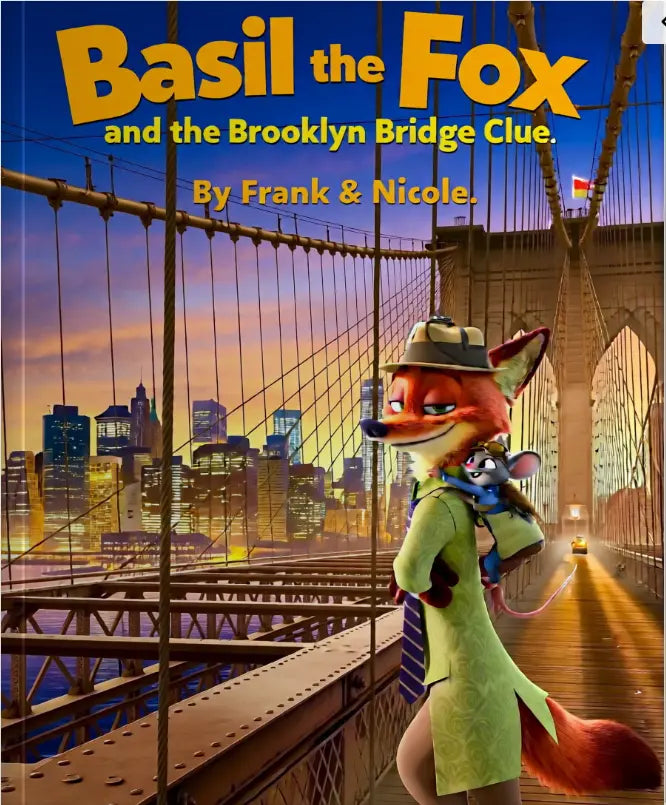
To add variety and deepen clue-reading, you can also rotate single-story selections. For example, the Central Park clue story emphasizes observation in a familiar setting. Another option is the Brooklyn Bridge investigation, which supports spatial thinking through guided attention to details in the environment.
Step-by-Step How-To: Use stories to build skills
Narrative learning is not only about enjoying books. It is about using stories as a structured learning tool. Follow these steps to turn any child-friendly story into an evidence-based practice in understanding, memory, and language.
-
Choose a story with a clear sequence. Pick a book where events happen in a noticeable order, such as a mystery with clues and a solution. This makes it easier for children to track “what came next.”
-
Set a single listening goal. Before reading, name one focus point. Examples include “Look for clues,” “Notice character feelings,” or “Find the reason something changed.” One goal prevents cognitive overload.
-
Pause for brief prediction. After a key moment, ask what the child expects will happen next and why. Predictions strengthen comprehension because the child must connect evidence to an outcome.
-
Use evidence language during discussion. Encourage the child to say “I noticed…” and “The clue shows…” This supports academic language patterns and improves narrative recall.
-
Retell in a simple three-part structure. Ask for: beginning, turning point, and resolution. This helps the child organize information and reduces memory gaps.
-
Convert the story into a creative response. Invite a drawing, a short “case report,” or a rewritten ending. Creative output consolidates learning by requiring the child to reorganize details.
-
Repeat with variation. When you revisit a clue or re-read a scene, ask a new question. For example, “What did the character miss?” or “Which clue matters most?” Variation deepens understanding without repeating the same prompt.
-
Close with one takeaway question. End with, “What did this story teach us about thinking carefully?” Reflection turns entertainment into skill development.
Practical routines that support lasting engagement
Consistency is more effective than intensity. A short reading block followed by two or three discussion prompts is often sufficient. When children know the pattern, they spend more mental energy on ideas rather than on uncertainty. Keep prompts brief and avoid turning the conversation into a test. The goal is curiosity, not pressure.
For families using a digital library, narrative learning for kids can also be supported through rereading. Rereading a single scene can be more valuable than starting a new book too quickly because it builds familiarity with language patterns and story logic.

Mind map connects characters, clues, and final solution
Personal Experience: From “reading time” to “thinking time”
I have observed a consistent shift when families move from simple reading to guided narrative learning. One evening, a child I worked with struggled to summarize a short story. The child could list events but could not explain why the events mattered. After a brief change, the results improved within two sessions.
Instead of asking for a full summary, I asked for predictions. I paused at a moment when the character found a clue and asked, “What do you think this means, and what else would we need to know?” The child answered with a reason, not a guess. Then I asked, “What did you notice that supports your idea?” The child pointed to a detail in the scene and linked it to the prediction.
On the second reading, I used the three-part structure. The child retold the beginning clearly, named the turning point, and described the resolution. The key change was the focus on evidence and explanation. The story became a thinking framework, not only a sequence of sentences.
This same method aligns well with mystery formats found in FN Library Online selections. When clues appear, children naturally practice observation, inference, and revision. Over time, they begin to apply those skills outside the book, such as in everyday conversations and creative projects.
Summary & Recommendations
Narrative learning for kids is a practical approach to comprehension and language development. Stories provide structure, and guided discussion gives that structure a purpose. When children predict outcomes, identify evidence, and retell key parts, they strengthen memory and critical thinking.
To implement the method, start small. Choose one story, set one listening goal, and use short prediction and evidence prompts. Then end with a simple retell or creative response. This process is scalable across grade levels because the prompts can be adjusted to match reading ability and attention span.
For a strong library entry point, consider exploring FN Library Online detective-style stories and bundles. You can begin with the City Mystery Bundle, then expand with focused clue stories such as the Seine River clue story or the Missing morning bell investigation. Rotating between settings keeps curiosity high while maintaining the same narrative skills.
Call to Action: Select one story this week, apply the eight-step routine, and measure progress by how clearly your child can explain evidence from the plot. If you want a guided start, browse the detective collections from FN Library Online and choose the installment that best matches your child’s current interest.
Disclaimer
This article provides general educational guidance. It does not replace professional advice from qualified educators or healthcare providers. Always consider your child’s individual needs, reading level, and comfort when selecting stories and discussion strategies.
Q&A
What is narrative learning for kids, and how is it different from regular reading?
Narrative learning for kids uses stories as a structured learning tool. Regular reading focuses on enjoying content, while narrative learning adds intentional pauses for predictions, evidence-based discussion, and retelling. This turns story engagement into practice for comprehension and communication.
How can I tell whether the story helped my child learn?
Look for indicators such as clearer retelling, better use of “because” when explaining, and more specific references to details from the plot. A child who can point to a clue and connect it to an outcome is showing improved narrative comprehension.
What types of stories work best for this approach?
Mysteries, adventure tales, and cause-and-effect stories tend to work well because they naturally include clues, character choices, and outcomes. Nonfiction can also support narrative learning when it is structured as a clear sequence with a problem and resolution.


Never give up. Today is hard, tomorrow will be worse, but the day after tomorrow will be sunshine.”

