

Updated on: July 2, 2026
Educational content for young readers builds knowledge, strengthens reading skills, and supports lifelong curiosity. When content is structured for attention and understanding, children learn more efficiently and retain concepts longer. High-quality learning materials also encourage confidence by guiding learners step by step. With the right mix of stories, explanations, and practice prompts, families and educators can help children develop strong learning habits.
Myths vs. Facts
Step-by-Step Guide
How to Choose the Right Learning Materials
Learning Design Principles That Work
Engagement Through Story and Questions
Frequently Asked Questions
Summary & Key Takeaways
Myths vs. Facts
-
Myth: Educational content for young readers must be purely instructional and repetitive.
Fact: Learning improves when information is paired with context, movement, and meaningful practice. Variety supports attention. -
Myth: Short content is always weaker than longer lessons.
Fact: Carefully sized lessons often perform better because they match working memory. Short segments with clear goals reduce confusion. -
Myth: Kids learn best when they only receive answers, not questions.
Fact: Curiosity is a learning engine. Questions invite active thinking and help children monitor their understanding. -
Myth: One style fits all learners.
Fact: Children differ in interests, reading level, and background knowledge. The best materials adapt through scaffolding and multiple entry points.
Step-by-Step Guide
To create or select learning experiences that work in real life, start with clear outcomes, then match format and difficulty to the learner. Use this process for classrooms, homeschooling, and family reading time.
-
Define one measurable goal. Decide what the child should be able to explain, identify, or apply after the session.
-
Choose a reading path that matches current skills. Select material that feels slightly challenging but not frustrating. If comprehension collapses, reduce complexity and try again.
-
Activate prior knowledge first. Use a quick prompt such as “What do you already know about this topic?” or “Where have you seen something similar?”
-
Present concepts in small sections. Keep paragraphs short and ideas distinct. When one concept ends, pause and confirm understanding before moving forward.
-
Use examples and non-examples. Show what the concept looks like, then show what it does not look like. This prevents oversimplified mental models.
-
Ask questions that require explanation. Prefer “Why do you think” and “How would you” questions. They lead to deeper reasoning than single-word answers.
-
Apply learning through a brief practice step. Use a short activity: summarize in two sentences, label key points, or answer a scenario-based question.
-
Close with retrieval practice. End by asking the child to recall key ideas from memory. Retrieval strengthens long-term retention.

Checklist of goals, steps, and practice prompts
How to Choose the Right Learning Materials
Not all educational content supports the same learning outcomes. When you evaluate a book, workbook, or digital set, look beyond the topic and focus on learning structure. The goal is to select material that helps children understand, practice, and remember.
1) Match difficulty to comprehension
Difficulty should be calibrated to the reader. A common sign of misalignment is repeated re-reading without progress. If this occurs, consider a shorter text, more scaffolding, or a different entry point.
2) Prioritize clarity and logical sequencing
Children learn best when concepts appear in a sensible order. Strong materials introduce foundational ideas, then build toward more complex reasoning. Look for transitions that guide the learner rather than leaving them to infer missing steps.
3) Look for questions that build thinking
A good learning resource includes thoughtful prompts. These prompts should invite the child to connect details to meaning. Productive questions are specific, observable, and answerable using the text.
4) Support repeated reading or practice
Children benefit from revisiting core ideas. Choose content that encourages repetition without becoming dull. This can include recurring structures, reappearing themes, or follow-up challenges.
5) Ensure the tone is encouraging and respectful
Confidence affects effort. When the writing tone is clear and respectful, children feel capable and are more willing to attempt difficult tasks.
For families seeking narrative-driven learning experiences, curated mystery series can be useful because they combine comprehension, vocabulary growth, and question-based thinking. For example, you can explore Basil the Fox city mysteries to see how story structure can support active reading and learning.
Learning Design Principles That Work
Strong educational content for young readers is not only “about learning.” It is designed to move knowledge from short-term understanding into long-term memory. The following principles reflect widely supported learning science practices.
Chunking and spacing
Chunking reduces cognitive load by separating concepts into manageable units. Spacing supports retention by returning to key ideas after short intervals instead of attempting to learn everything at once.
Scaffolding and gradual release
Scaffolding means providing temporary support. Over time, the learner should need less help. A useful resource guides the child with clear steps, then encourages independent thinking through practice questions.
Consistent terminology with varied examples
When important terms are consistent, children build stable mental maps. At the same time, varied examples prevent narrow interpretation. The learner understands the concept, not only one instance.
Feedback that improves reasoning
Feedback should help children refine thinking. If an answer is incorrect, explanations should clarify why and how to adjust. This is more effective than simply stating that the response is wrong.
Vocabulary integration
Vocabulary development is most effective when new words are introduced in meaningful contexts. Look for materials that define key terms naturally and then use those terms again later.

Flowchart showing concept, example, question, and recall
Engagement Through Story and Questions
Children often learn best when attention stays focused. Story can create that focus by providing context, goals, and suspense. When narrative learning is paired with structured questions, the reading becomes active rather than passive.
Why narrative supports learning
Stories provide a timeline of cause and effect. This helps children connect information to outcomes. They also learn language patterns, pacing, and descriptive detail in a natural setting. When a child follows a plot, they practice inference, which is a core skill for comprehension.
Question types that deepen comprehension
Prediction questions: “What might happen next and why?” These train reasoning beyond memorization.
Character and motive questions: “What does the character notice, and how does it change the plan?” These develop perspective-taking.
Evidence questions: “Which lines support your answer?” These encourage careful reading habits.
Transfer questions: “How would the solution apply to a new situation?” These promote generalization.
Using mysteries for skill-building
Mysteries are especially effective because they require observation and interpretation. Children must track clues, notice details, and connect them to a conclusion. This supports reading accuracy and logical thinking.
If you want to focus on place-based clues and investigative reading, consider exploring Central Park mystery. For bridge-and-river settings that encourage careful attention to description, you can also review Seine River clue. These formats can strengthen comprehension skills while keeping the experience engaging.
Frequently Asked Questions
What age range benefits most from educational content for young readers?
Most children benefit when the reading level and the concept difficulty match their current skills. Many families start with guided reading in early grades and gradually move toward more independent work. The key indicator is sustained comprehension with manageable support.
How can I tell whether a learning book or story is truly educational?
Look for clear structure, meaningful vocabulary in context, and prompts that require thinking rather than guessing. Educational value is stronger when the resource includes follow-up questions, examples, and opportunities to recall key ideas.
How often should a child practice with learning materials?
Consistency matters more than long sessions. Short practice periods repeated several times per week often produce better results than infrequent, lengthy study. Ending with a brief recall step improves retention and helps children consolidate learning.
Summary & Key Takeaways
Educational content for young readers works best when it is intentionally designed for attention, comprehension, and long-term retention. Start with clear learning outcomes, choose difficulty that supports success, and use structured questions to turn reading into active thinking. Then reinforce learning with practice, retrieval, and gradually reduced support.
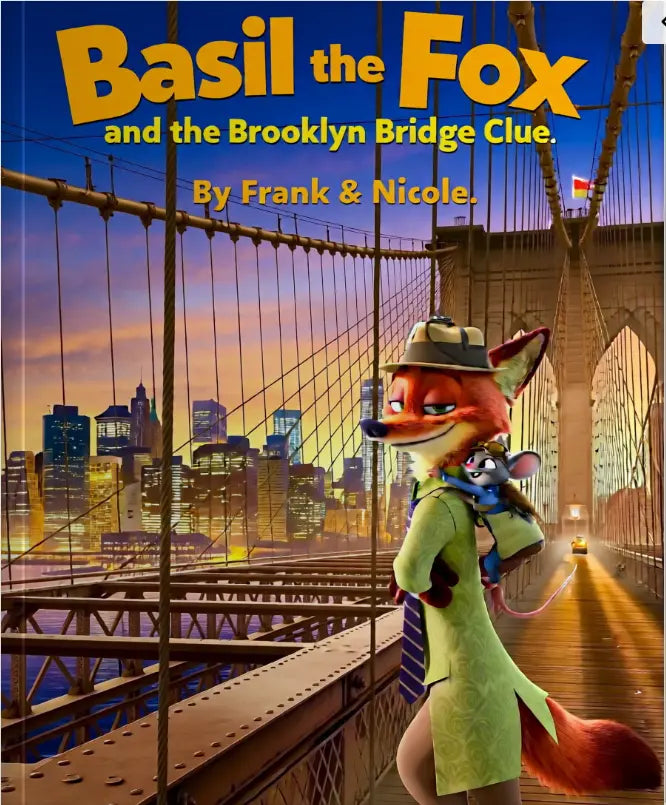
If you want to explore narrative-based learning experiences that encourage observation and reasoning, visit Brooklyn Bridge mystery and compare formats based on structure, question quality, and vocabulary support. As you evaluate new materials, prioritize clarity, sequencing, and feedback that improves reasoning rather than simply checking answers.
Disclaimer: This article provides general guidance on selecting and using learning materials. It does not replace professional educational advice. Learning needs vary by child, and readers should adapt strategies to individual circumstances.


Never give up. Today is hard, tomorrow will be worse, but the day after tomorrow will be sunshine.”

